
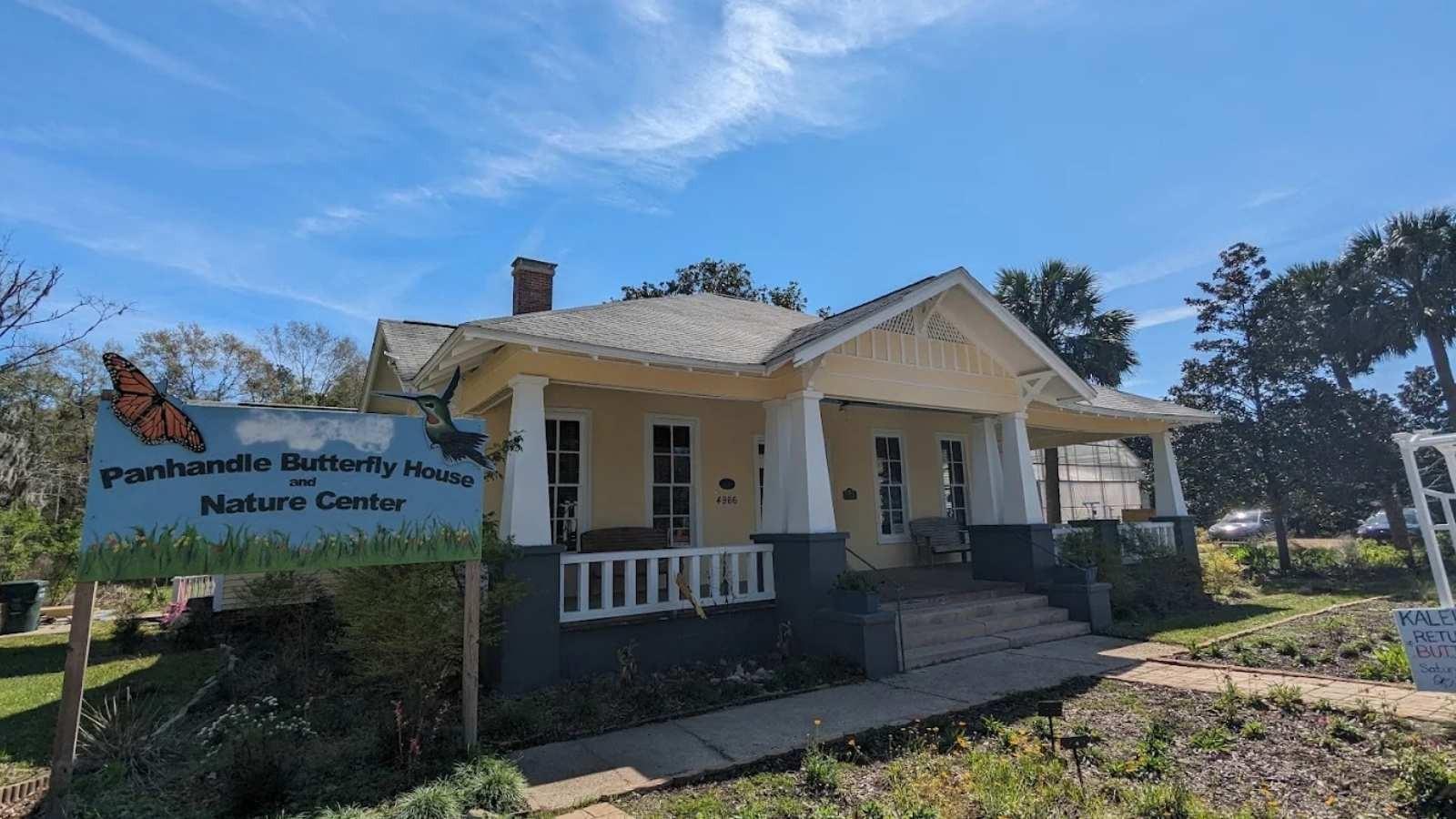
The Panhandle Butterfly House and Nature Center sits in downtown Milton, about 25 miles from Navarre Beach. This 1,800-square-foot native butterfly vivarium fills a restored 1870s home on the Blackwater River, with a nature trail and 18 gardens. Most visitors don't know it moved from Navarre Park in 2018. Plan on an hour-long stop, open Friday and Saturday from 10am to 2pm.
If you asked a longtime Navarre local where to find the butterfly house, they'd probably point you toward the beach bridge, since that's where the attraction lived for over two decades. That answer hasn't been true since 2018. The Panhandle Butterfly House left its original home in Navarre Park and now operates from a restored 1870s home near the Blackwater River in Milton, roughly 25 miles inland.
The move means fewer out-of-town visitors know it exists in its current form, and that's exactly why it works so well as a day trip. You get a quieter crowd, a bigger property, and a different kind of Florida scenery than the beach view you left behind that morning.
Founders Jack and Fonda started the project in 1997 with nothing more than a tent in their backyard, and the idea grew into a program that Keep Santa Rosa Beautiful eventually adopted as its own.
Two decades at Navarre Park built up a loyal following before county renovation plans forced a search for new ground. What the organization found was the T.W. Jones House, a piece of Milton history that needed saving as much as the butterflies needed a home. Renovation turned the property into a nine-acre conservation site, and the current version of the Butterfly House opened its vivarium doors a few years later.
A Quick Word From Blue Moon Vacation Rentals
At Blue Moon Vacation Rentals, we offer Gulf-front homes and condos across Navarre Beach, from large group rentals to cozy condos and pet-friendly properties. As experts in everything Navarre Beach, we share well-curated local tips on our blog, including guides on family-friendly fun in Navarre Beach, visiting Navarre Beach in fall, and many more.
Contents
1. How to Get There from Navarre Beach
4. The Nature Trail and Gardens
7. Make It Part of Your Navarre Beach Trip
How to Get There from Navarre Beach
Getting to Milton from Navarre Beach takes about 30 to 40 minutes by car, and the drive itself sets a nice pace for the day. Head north on FL-87, and you'll watch the scenery shift from beach communities to pine woods and small-town streets in a fairly short stretch. The route stays simple, with no confusing turns to track on your phone while someone else drives.
Once you arrive at 4966 Henry Street, parking is easy. The property has its own lot attached to the site, so you won't need to hunt for street parking or feed a meter downtown. Because the Butterfly House sits in Milton's historic district near the Blackwater River, you can also stroll a bit before or after your visit and take in the old buildings nearby.
Plan to leave Navarre Beach by mid-morning if you want to catch the vivarium during its open hours. A day trip like this pairs well with a stop for lunch in Milton afterward, so you're not rushing straight back to the coast.
What Makes It a Hidden Gem
During its 21 years at Navarre Park, the Butterfly House built a following that stretched well beyond Santa Rosa County. Visitors came from more than 40 states and 15 countries, and the site averaged around 14,000 guests a year at the beach location. That kind of track record leaves the current low profile even more surprising.
Since the 2018 move, a lot of longtime fans and out-of-town visitors simply haven't caught up with where the organization landed. The program reaches its 30th year in the community in 2027, a sign of how deep its roots run in the area.
Part of the reason why it's a hidden gem comes down to the size of the undertaking. Keep Santa Rosa Beautiful purchased the T.W. Jones property from the Blackwater River Foundation in 2020, then spent the next several years on construction and restoration before the current site fully opened.
Crews built a new humidity-controlled vivarium from scratch, added accessible walkways, and planted pollinator gardens across the grounds. The foundation also placed most of the land surrounding the house under a permanent conservation easement, so the property will stay protected regardless of what develops around it in the future.
The result is a bigger, more polished site than the original tent-and-park version ever was, sitting on land with real historical weight behind it. You get a historic home, a working conservation program, and native butterflies in one stop, and most out-of-town visitors driving past on Henry Street have no idea it's there. That's what makes this place different from a typical roadside attraction.
Step Inside the Vivarium
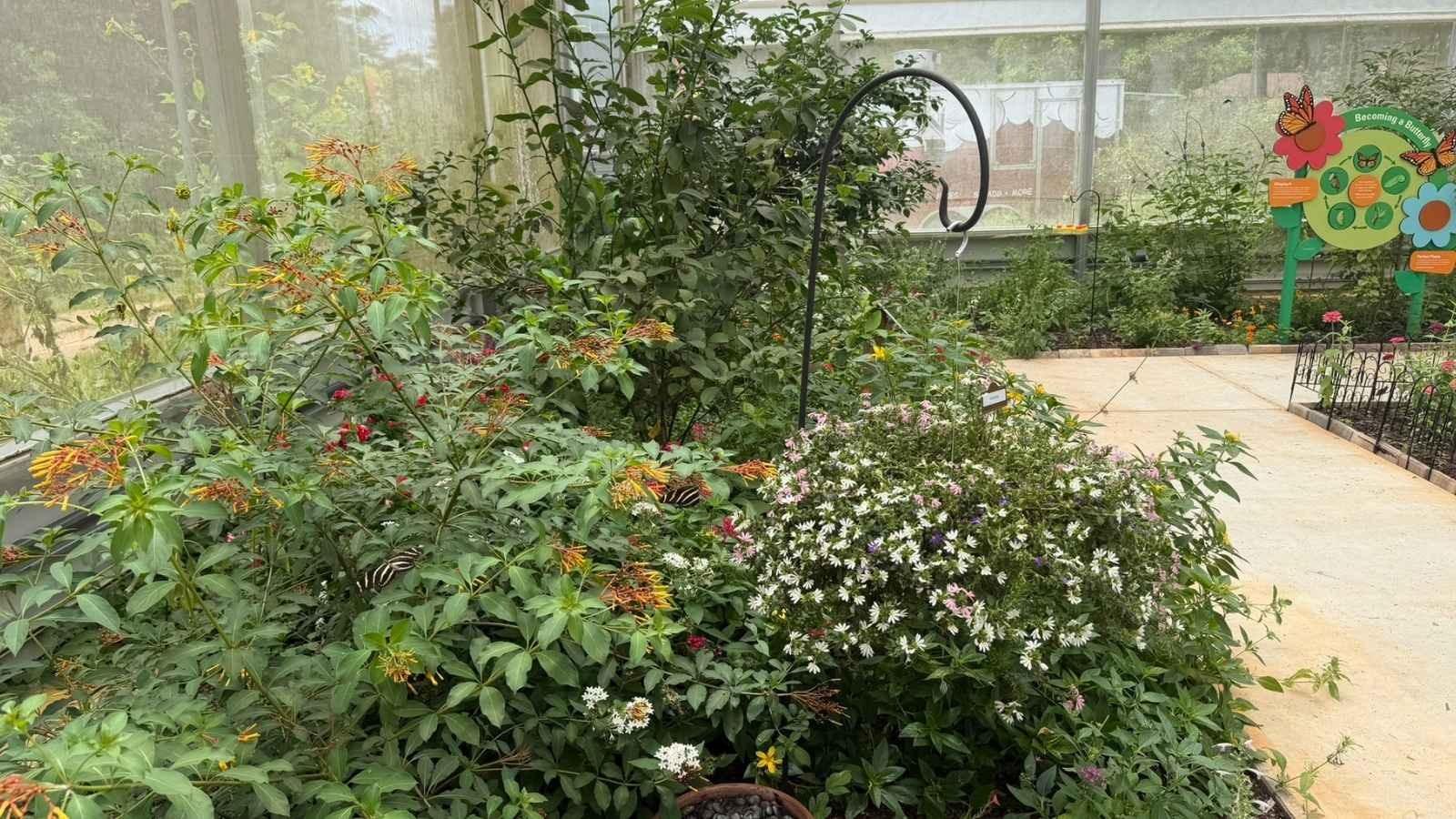
The main draw for most visitors is the 1,800-square-foot vivarium, a humidity-controlled greenhouse entered through a small vestibule that keeps the butterflies from slipping out each time the door opens.
Tropical and native plants fill the space, and butterflies drift low enough that you can watch them land on blooms just a few feet away. Walking into that space put me right in the middle of some of the most beautiful butterflies I have seen, and the color and pattern on every wing felt different enough to stop and study each one.
Inside, you'll find both live butterflies and a permanent collection worth slowing down for. More than 300 species of mounted butterflies from around the world line the hallway walls of the historic home, a collection donated in 1999 by Gulf Breeze resident Dr. Tom Grow. Northwest Florida is home to roughly 116 native butterfly species, and the vivarium typically houses around ten of them at any given time, so the mix changes depending on when you visit.
You can also watch the butterfly life cycle up close, since feeding caterpillars and chrysalids sit on display in their own area, so kids get to see how a caterpillar turns into the butterfly floating past their head.
The Historic T.W. Jones House
Beyond the vivarium, the house itself tells its own story. Thomas and Alice Jones lived here from the late 1890s through the mid-20th century, and the building later became a Craftsman-style bungalow after a 1920s renovation.
Today it holds a history room with period furniture and family portraits, a classroom used for school programs, and the Wings & Wonders gift shop, where proceeds go straight back into funding the center's programs. The shop stocks locally made goods, pollinator-friendly seeds, educational toys, and butterfly-themed keepsakes.
The Nature Trail and Gardens
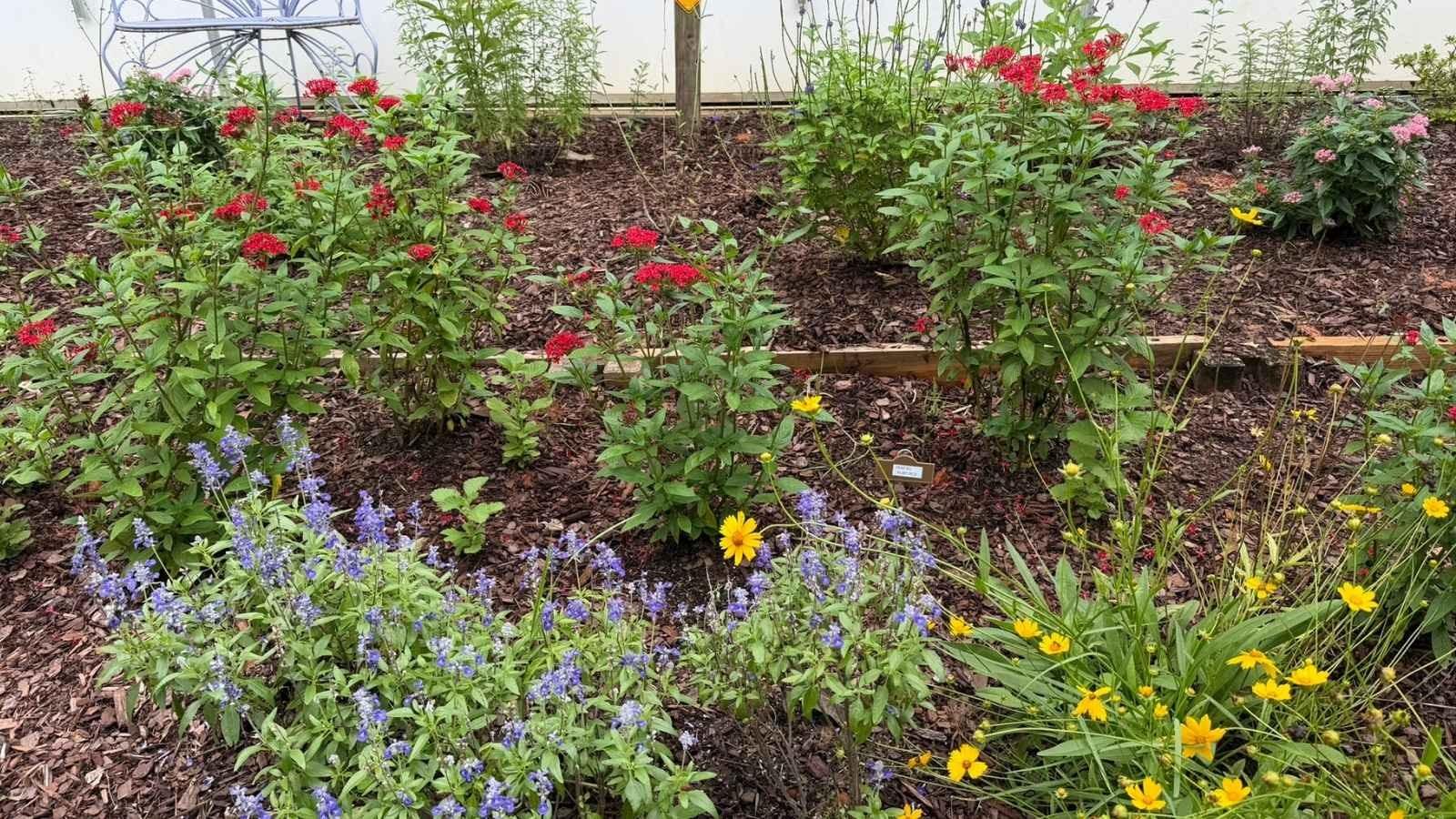
Once you've had your fill of the vivarium, step outside to the nature trail out back, which winds through native plantings near the river. Shade covers most of the path, so even a warm afternoon stays comfortable, and the route moves slowly enough that you can actually stop and notice things rather than rush through.
Eighteen separate gardens border the trail and the main grounds, each planted with a different mix of native and pollinator-friendly species. Some sections lean toward bird-friendly shrubs and vines, while others focus purely on the plants that draw butterflies outside the vivarium walls.
On busier days, docents walk the gardens with visitors and point out caterpillars on the host plants, then name the adult butterflies you're likely to see along the way. Wander through in spring or summer, and you'll likely spot wild pollinators working the same blooms as the vivarium's residents, just without the greenhouse glass between you.
Programs and Events
The Butterfly House does more than open its doors for casual visits. Throughout the year, the center runs school field trips and guided tours for groups, along with gardening workshops and conservation talks aimed at connecting the Milton community with the natural world around them. Homeschool families in particular have found a good fit here, since the classroom space and hands-on programming work well for smaller, flexible groups.
Seasonal events add another layer worth planning around. One of the center's signature events is Monarch Madness, a fall celebration tied to the monarch migration through the Panhandle. The center also hosts community celebrations built around pollinators and local food, typically featuring food trucks, vendor booths, and activities for kids, so check their Facebook page before your trip in case one lines up with your visit.
Volunteers also play a big role in keeping the gardens and programs running, and the organization regularly welcomes new help if you're interested in giving more time than a single afternoon visit.
Good to Know Before You Go
The Butterfly House currently operates Friday and Saturday, from 10am to 2pm, with visits outside those hours available by appointment. Admission runs $7 for adults and $5 for children, with kids under 3 admitted free. A quick call to (850) 741-9077 before you head out is a smart move, since hours can shift seasonally.
If you want to extend the day, the West Florida Railroad Museum sits directly across the street, and Bagdad Mill Site Park is a short drive away. Milton is a designated trail town, so cyclists and walkers can also pick up the paved Blackwater Heritage State Trail, an 8.1-mile path nearby. Downtown's Milton Riverwalk runs along the same river, and Blackwater River State Park a bit further out draws tubers and paddlers to its clear water and white sandy banks.
Make It Part of Your Navarre Beach Trip
A morning at the Panhandle Butterfly House pairs naturally with an afternoon back on the sand, and having a comfortable place to return to makes the whole day easier.